
By: Nick LaPorte, 6/27/2019
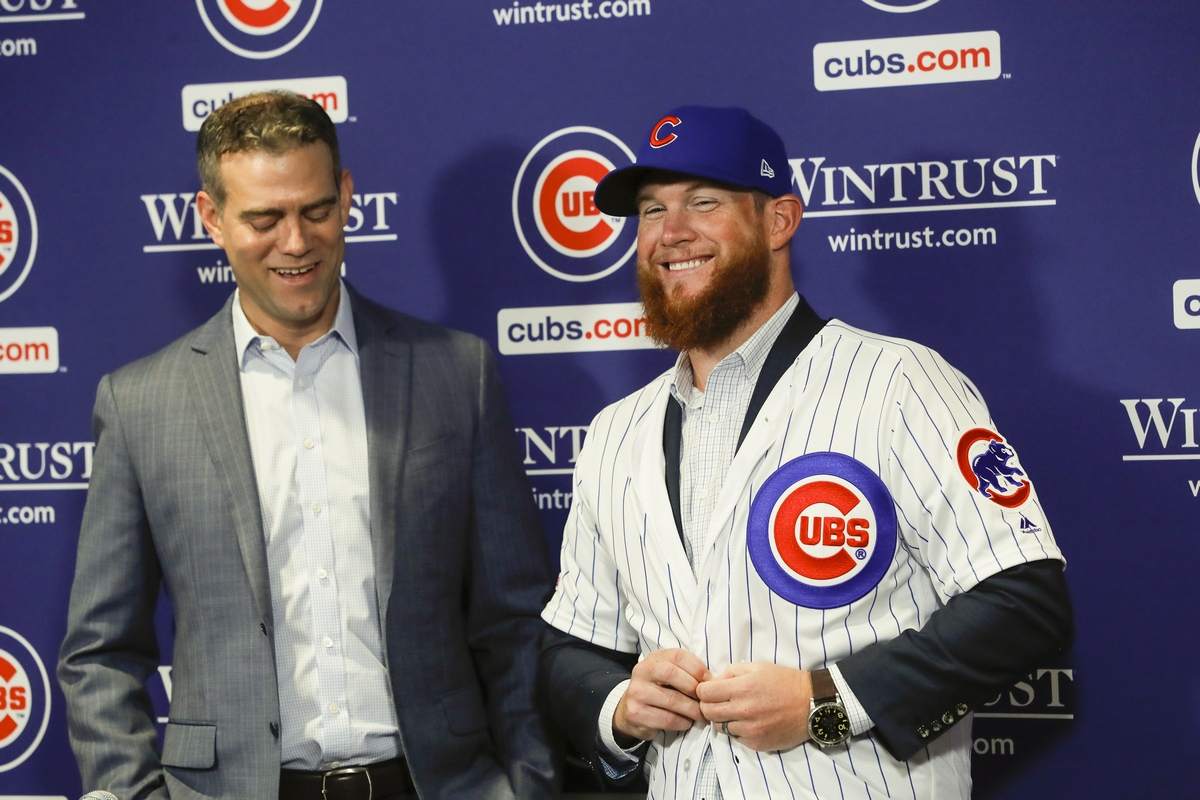
After an abnormally long offseason for Craig Kimbrel, the Cubs finally signed the veteran right-hander to a 3-year, $43 million deal through 2021, with a team option in 2022. Kimbrel got the security of a longer contract, and the Cubs got something of a bargain; the Yankees gave Aroldis Chapman $17 million per season and the Dodgers signed Kenley Jansen for $16 million per season. Of the three pitchers, all dominant closers with big-game pedigree, the Cubs have the cheapest deal.
Because of the way the MLB has structured free agency, when a player elects to leave a team in free agency, if the team extended him a 1-year qualifying offer, that team receives a draft pick in compensation for losing that player. But in the case of Craig Kimbrel, this is not how it worked. The Cubs waited until after the MLB draft, and as a result the Red Sox will not get that compensation pick. It became clear sometime in May that this was Kimbrel’s plan, as well as fellow veteran Dallas Keuchel, who signed in Atlanta. The Cubs did not need Kimbrel right away, electing to have him spend time in the minor leagues approximating spring training.
Now, as of today, Kimbrel is active on the Cubs 25-man roster and ready to pitch in meaningful baseball for the first time since the 2018 World Series. As much as Kimbrel tried to stay in game-ready condition, there will be an adjustment period. The rest of the league has already played half a season. Potential All-Star closers like Josh Hader of the Brewers, Brad Hand of the Indians, and Will Smith of the Giants already have 30+ innings and 20+ saves on the year. Kimbrel will be the Cubs’ closer, without a doubt. But it may take some time before Kimbrel looks like Kimbrel again. Look at Dallas Keuchel; in his first start of the season last Friday, he was fatigued by the 6th inning. Starters and relievers are different, but the adjustment period is true for all players.
The last time we saw Kimbrel pitch in an MLB game, he and the Red Sox were on their way to a World Series championship. Kimbrel recorded the save in 6 of the Red Sox 11 playoff wins, pitching in 9 and not blowing a single save, but he did not look like his normal lockdown self. Kimbrel carried an ERA of 5.91 in those 9 games, and threatened to lose at least three of those saves. Kimbrel appeared to turn a corner early in the ALCS, but his ERA from the ALCS to the World Series was still north of 4. For reference, Kimbrel’s career ERA is 1.91, and his FIP is 1.96. What you see is what you get with Kimbrel, he very rarely performs differently than the advanced metrics think he should.
One reason Kimbrel is such an effective closer is his strikeout totals. Kimbrel strikes out 15 batters per 9 innings in his career, and Kimbrel carries a low 40% groundball percentage. In short, Kimbrel doesn’t let opponents put the ball in play, forcing many weak popups and striking out the rest. Kimbrel’s 333 saves is highest among active relievers, and Kimbrel has proven his worth at every stop; from his early days in Atlanta, his brief stay in San Diego, and his apex in Boston. The Cubs aren’t taking a flyer on him, Kimbrel was quite literally the best reliever available on the market. The reason he waited to sign was monetary; up to 20 teams would have jumped to sign him to a 2-year $28 million deal. Kimbrel wanted the long-term security of a three-year deal though, and in the end, the Cubs met him at that number.
In Chicago, Kimbrel’s game meshes well in some cases. His high strikeout rate is crucial in Wrigley, which is a smaller ballpark. But the career 38% flyball rate may give him issues, as we’ve seen his HR/FB rate jump north of 12% in recent seasons. The bottom line is Kimbrel will have an adjustment period. Fenway Park, Kimbrel’s former home, isn’t a cavernous park like, say, Miami. So in that respect, Kimbrel is used to pitching in a park with smaller outfield dimensions. The bigger issue for the Cubs is twofold; how quickly can Kimbrel be up to “game speed,” and can Kimbrel rebound from a poor playoffs?
To answer the former, it can take up to a month to get into the grind of a season. The All-Star break is right around the corner too, which is no help for rhythm. Kimbrel will probably pitch in no more than 6 or 7 games at most before the break, and then he has to shut it down again for almost a week. The Cubs should expect Kimbrel to gear up into midseason form around mid-August, which fits their timeline. Kimbrel should be in his groove before the stretch run, and he will help the Cubs beleaguered bullpen fight for the NL Central crown. As for whether Kimbrel can bounce back, that is a different question entirely. Home runs were up for Kimbrel in the playoffs, as was the batting average on balls put in play (BABIP). Batters were making hard contact in the postseason, but his 27.1% Hard% in the regular season was abnormally low. Basically, Kimbrel regressed at the worst time.
The Cubs should expect Kimbrel to be back to normal this year, and the lightened workload should only help. Kimbrel still has his issues; a career playoff ERA of 3.92, the last time he pitched was the worst 9-game stretch for him in years, and he’s uncomfortable in any non-traditional save opportunities. As a closer his whole career, don’t expect Kimbrel to be happy if manager Joe Maddon uses him in the 7th or 8th innings, or asks him to go multiple-innings for a save in the playoffs.
But the important thing for the Cubs is to take back the NL Central from the Brewers first, a crown the Cubs held in 2016 and 2017. The Brewers are fighting tooth and nail for the top spot; the Cubs have a narrow 1-game lead as of today with 13 games left against the Brewers. Anything can happen in that divison; last-place Cincinnati is only 6 games behind the Cubs. The NL Central is shaping up to be the league’s best playoff race.
That’s why the Cubs signed Kimbrel; to get them to the playoffs and beyond. For Kimbrel, now on his 4th team, that’s exactly the kind of high pressure with which he is comfortable.
 Stats On Deck Blog