

By: Nick LaPorte, 6/28/2019
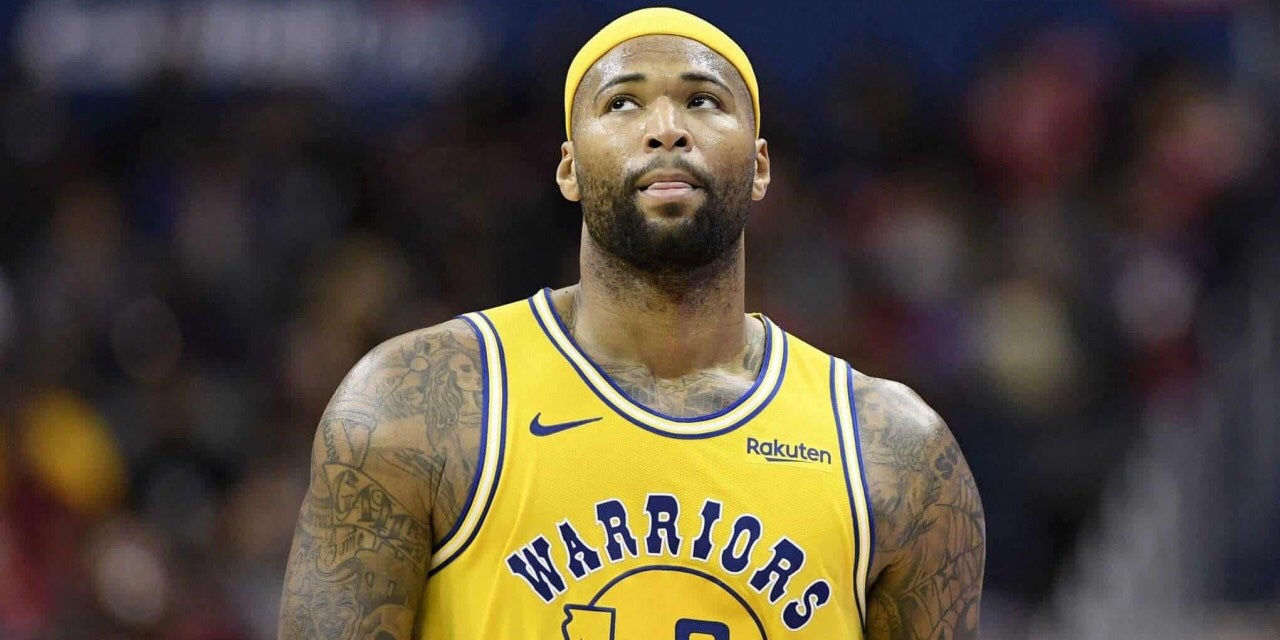
NBA Free Agency is almost upon us, with the July 1st date just a couple of days away. Speculation has run rampant, with rumors of Jimmy Butler to the Rockets, Kawhi Leonard to the Clippers, and Kemba Walker to the Celtics, among others. In fact, this free agency pool of talent is so great that I wrote about the 10 best players available and where they should sign, found here. With the marquee teams focused on Kawhi, Kemba, Butler, and Kyrie Irving, the league has somewhat forgotten about DeMarcus “Boogie” Cousins, who is also a free agent.
If I told you at the beginning of the 2017-2018 season that just 1 summer later, Cousins would be an unrestricted free agent and not be considered a top-10 player available, you would have called me an idiot. But when Cousins ruptured his achilles tendon in January of 2018, and missed over one full calendar year, the course of his history changed irreversibly. Cousins was set to enter free agency last summer as a probable top-3 player available, after LeBron James and Paul George. Instead, Cousins found the market dried up for him, with few legitimate suitors. Cousins eventually signed a 1-year deal worth about $5 million with the Warriors, a far cry from the $30 million per season extension the Pelicans initially wanted to offer him.
For Cousins, the Warriors offered a unique situation; since they had so much talent, Cousins could take as much time as he wanted to rehabilitate his injury. Also, the Warriors had won 2 straight championships in dominant fashion, losing only 1 of those 9 NBA Finals games. In short, Cousins could get healthy at his own pace, with no pressure, and hopefully grab a championship on his way out the door. The Warriors never planned to keep him past this season, since they couldn’t legally sign him for anything larger than a 1-year, roughly $8 million deal. Cousins believed the market would be more accepting of him this time, especially with 30 games of evidence that he could, in fact, still play at a high level.
Cousins looked nearly as good as he used to in his limited time with the Warriors in the regular season. Per 36 minutes, Cousins averaged 23 points per game, 12 rebounds per game, and 5 assists per game. Compare that to his per-36 from 2017-2018, in which he averaged 25 points per game, 13 rebounds per game, and 5 assists per game. All in all, not much of a drop off for Cousins. To be fair, he did only play 26 minutes per game, a far cry off from his 36 minutes per game in 65 games with the Pelicans. The Warriors definitely took it slow with Cousins, opting to save him for the playoffs and unleash his unique skillset in big games.
Well, Cousins ran into some bad luck right away. In his first ever playoff game, the first game of round 1 with the Warriors this year, Cousins injured his quad. This injury was not related to the achilles tear, but it was a disappointment for Cousins who waited 9 seasons to taste playoff basketball. Cousins set out on an ambitious rehab schedule, and only missed the next 15 games. By game 1 of the NBA Finals, Cousins was back in action. In his 8 playoff games this year, though, Cousins looked like he was playing hurt. He averaged 8 points per game and his eFG% was .425, well below Cousins’ season averages of 16 points per game on .515 eFG%. There was no doubt Cousins rushed back into action, and his play suffered as a result.
The interesting thing about Cousins is how the narrative has changed during his career. In Sacramento, he was known as a locker-room issue, butting heads with coaches and failing to lead his team to the playoffs in 6 seasons. When Cousins was traded to New Orleans, and paired with fellow star big Anthony Davis, all of a sudden Boogie was no issue. Especially in year two, before the injury, Cousins and Davis meshed well on and off the floor. Winning cures all, and Cousins was in a winning environment for the first time since college. After this achilles injury, Cousins carried no off-the-court issues. As a teammate, Cousins was engaged and helpful in New Orleans and Golden State. The question for teams now is not about his off-court issues, but whether Boogie’s on-court production is worth the risk.
Entering the 2019-2020 season, Cousins will be 29 years old, with a major injury under his belt. Although Cousins has begun to stretch his range to three-point land, shooting 33% and 36% in New Orleans, he still has difficulty in a modern pace-and-space offense. Cousins will always be most effective operating out of the low post, which is something NBA teams just don’t do much anymore. To make matters worse, Cousins has never been a defensive positive, like other free agent big-men such as Al Horford, Marc Gasol (opted in with Toronto), or the lower profile guys of Deandre Jordan’s caliber. Why should a team offer Cousins $15-$20 million per year when you can get Deandre Jordan on a veteran minimum contract? Cousins is better than Jordan, but at those prices, Jordan may be more valuable.
Every team that’s in on the major free agents, like both NY teams, both LA teams, and Boston, has expressed little to no interest in Cousins. While it may make sense for the Lakers to re-pair Cousins and Davis, at the right price, the Lakers have not entertained that idea yet. Brooklyn, who is after Kyrie Irving and Kevin Durant, would not want to settle for Cousins. The same goes for the Clippers, who are hanging on to the hope that they can sign Kawhi Leonard and another free agent star. Even the Mavericks, who go after every center in free agency every year, have no reported interest in Boogie Cousins. Once again, the market for Cousins is dry.
The best hope for Cousins may be that the Knicks strike out on Kyrie, Durant, and Kemba. Brad Botkin of CBS reports the Knicks may offer Cousins a “considerable amount” for one year if they get no other free agents. This is the best case scenario for Cousins, for a few reasons. First, Cousins can secure a more lucrative payday than he did last year, which is important because Cousins is going to be a 30-year old big man next summer. He may have one last large contract in him, but no one wants to offer it this summer. Go to the Knicks, put up 25 points per game and 15 rebounds per game, and prove that you’re healed fully from the achilles injury. Few NBA players ever come back stronger after an achilles tear, but Cousins doesn’t have to be better than before.
Cousins just has to be good enough next year to prove he’s worth a long-term deal in 2020, and the Knicks are the perfect place to start.
 Stats On Deck Blog