
By: Nick LaPorte, 7/15/2019
In perhaps the wildest offseason in NBA history, teams like the Lakers, Clippers, Rockets, and 76ers have dominated the headlines. Just this month, Boston has replaced Kyrie Irving with Kemba Walker, Kawhi Leonard and Paul George left their teams to play in LA, and Lebron James finally got his buddy Anthony Davis to join him on the Lakers. The Bucks carry momentum into 2019-2020, with reigning MVP Giannis Antetoukuompo and a returning cast that led the NBA with 60 wins. Even the Utah Jazz have made headlines as the sleeper pick to make a Finals run. All these teams have a chance to make a run, which is why we can’t stop talking about them.
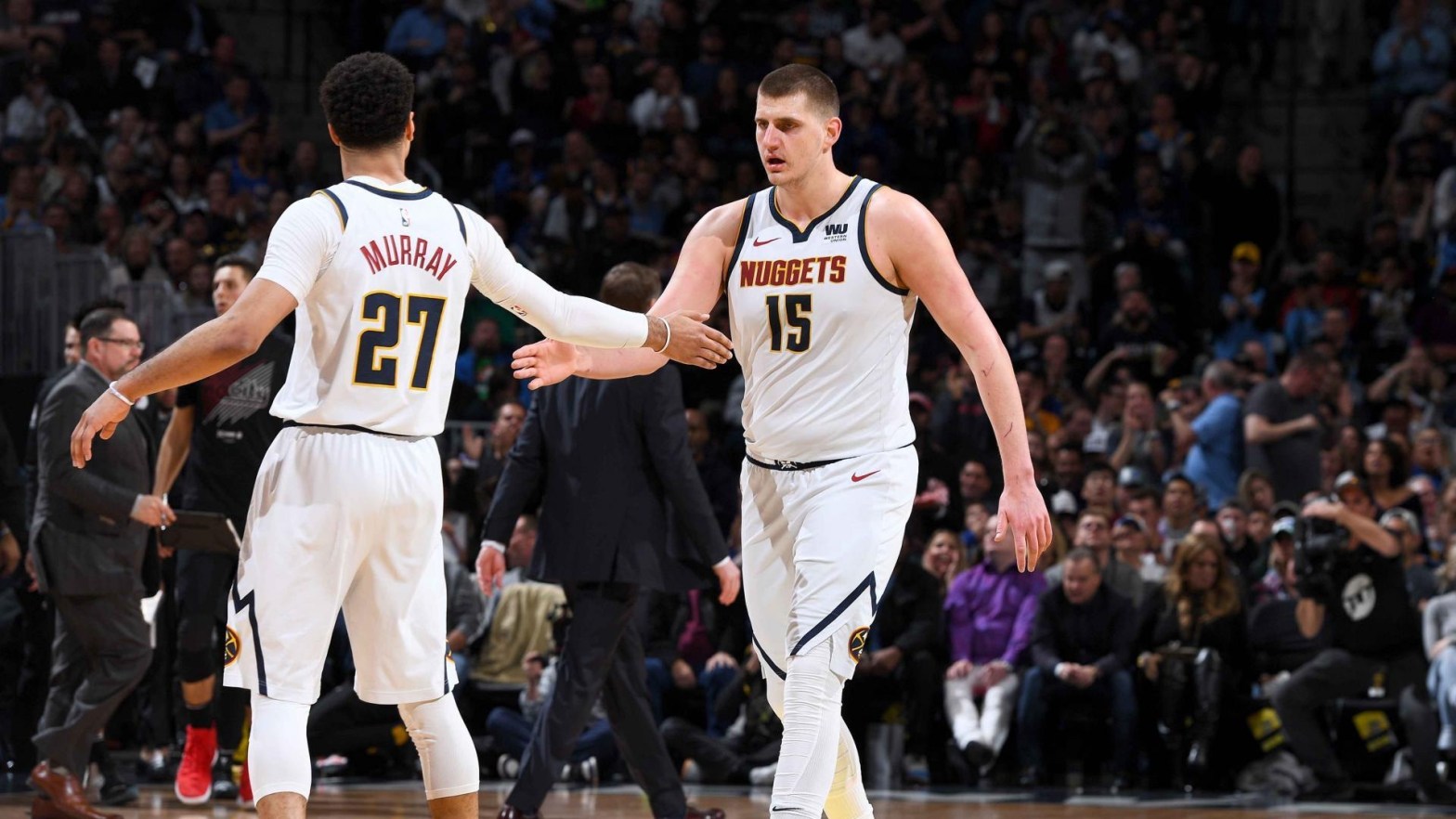
Lost in all this madness is a team that threatened to win the West last season. No, I’m not talking about the Trail Blazers, who I believe got worse in free agency. I’m talking about the Denver Nuggets, led by All-NBA Center Nikola Jokic. The Nuggets didn’t do anything over-the-top this summer; they extended guard Jamal Murray after an impressive postseason, and decided to stand pat with the team they have. The most exciting thing that happened in Denver was GM Tim Connolly deciding to stay, instead of heading to his hometown Washington Wizards.
To be fair, the Nuggets did make one big move in a summer that defines player movement. The Nuggets traded a first-round pick to acquire the Thunder’s Jerami Grant, a stretch 4 that showed promise playing next to Steven Adams. In Denver, his game should flourish. Jokic is one of the best passers in the league, and his ability to operate the offense from the high post makes him a dangerous floor general. The key to success for Denver is to build around Jokic, and adding Grant is a step in the right direction. Paul Millsap succeeded in the front court with Jokic, and Denver already selected his team option to stay in Denver for one more year. Expect Denver to utilize Millsap as a starter, but decrease his playing time in favor of Grant as the season moves along.
The Nuggets will have to balance the playing time of Millsap and Grant, but they can be creative. When Jokic rests, the 2 power-forwards can play together in a small-ball lineup. Both Millsap and Grant can also play next to Jokic, so there should be plenty of minutes for both. Even if Denver only uses Grant as a pure backup, his athleticism and rebounding skills will be enough to earn him 15-20 minutes of playing time on a contender. One problem Denver had last year was their overuse of Jokic; by the time the 2nd round of the playoffs rolled around, Jokic looked fatigued. Grant should help take some minutes away from Jokic in small ball lineups and let Denver utilize load management for their star big man.
Denver finished 2nd in the West last season, and pushed the Trail Blazers to 7 games in the Western Conference Semifinals. While teams like the Clippers, Lakers, Rockets, and Jazz improved, others like the Warriors, Thunder, Spurs, and Trail Blazers got worse. Denver should still be in conversation as a potential home-court advantage team in the playoffs. It’s important for Denver to have home court in the playoffs. The Nuggets are traditionally a very good home team, using the altitude to their advantage to run teams off the floor. Young stars Murray and Gary Harris, as well as newcomer Grant, should only help in that regard.
The biggest question for Denver is how good can Jamal Murray become? The playoffs gave us some answers about his ceiling; in 14 playoff games, Murray averaged roughly 21 PPG, 5 APG, and 5 RPG. Murray showed the ability to close games as a star, putting up back-to-back 34 point efforts in games 3 and 4 of the WCSF. Murray, however, is at his best when he’s passing the ball. He has the size and skills of a traditional PG, but too often Murray is a ball stopper on offense. Murray only shot 43.7% from the field last year, and his 5/2 assist:turnover ratio makes me think he may never reach the heights of a point guard like, say, Chris Paul or John Wall in their primes. Murray is a flawed player, and I wonder if he will ever make an All-Star team in a loaded West.
Still, Murray showed enough promise for Denver to invest in a 5-year, $170 million extension. This extension actually doesn’t start until the 2020-2021 season, but Denver didn’t want to wait around. After seeing the wait-and-see approach backfire for the Jazz with Gordon Hayward a few years ago, teams are more eager than ever to lock their young stars into long contracts. The 76ers, for example, signed Ben Simmons to the same deal as Murray when Simmons still won’t attempt a shot from behind the three-point arc. Denver is betting on Murray to make the leap, and become the Robin to Jokic’s Batman.
This analogy isn’t great though because Jokic’s nickname is literally “the Joker,” so maybe Denver doesn’t want a Batman/Robin situation. Maybe they want Murray to be Batman and the Joker to be, well, the Joker. As Heath Ledger’s Joker said to Batman in Christopher Nolan’s The Dark Knight, “you complete me.” This is what the Nuggets will want; not a hero and a sidekick, but 2 people that collaborate to create something bigger.
(I admit it’s not a great analogy. But I can’t miss the chance to talk about Nikola Jokic and “The Dark Knight”. It’s just too good).
No matter what happens, the hopes of the Nuggets rest on the shoulders of Murray. Jokic has proven he’s one of the game’s best players. The Nuggets know they have an elite player in Jokic, a player who can carry them to the playoffs year after year. They hope Murray can develop into a star as well, and Denver’s cap situation is such that they will have trouble adding a star player in free agency. Instead of chasing Kawhi Leonard, Kyrie Irving, or Jimmy Butler, the Nuggets chose to put their faith in Murray, hoping that these next few years see him reach his potential.
If that happens, Denver will be a title contender for the next 5 years, and maybe even beyond that. But if Murray ultimately never reaches star status? Well, the Nuggets will have to find another way to build around the Joker.
 Stats On Deck Blog